
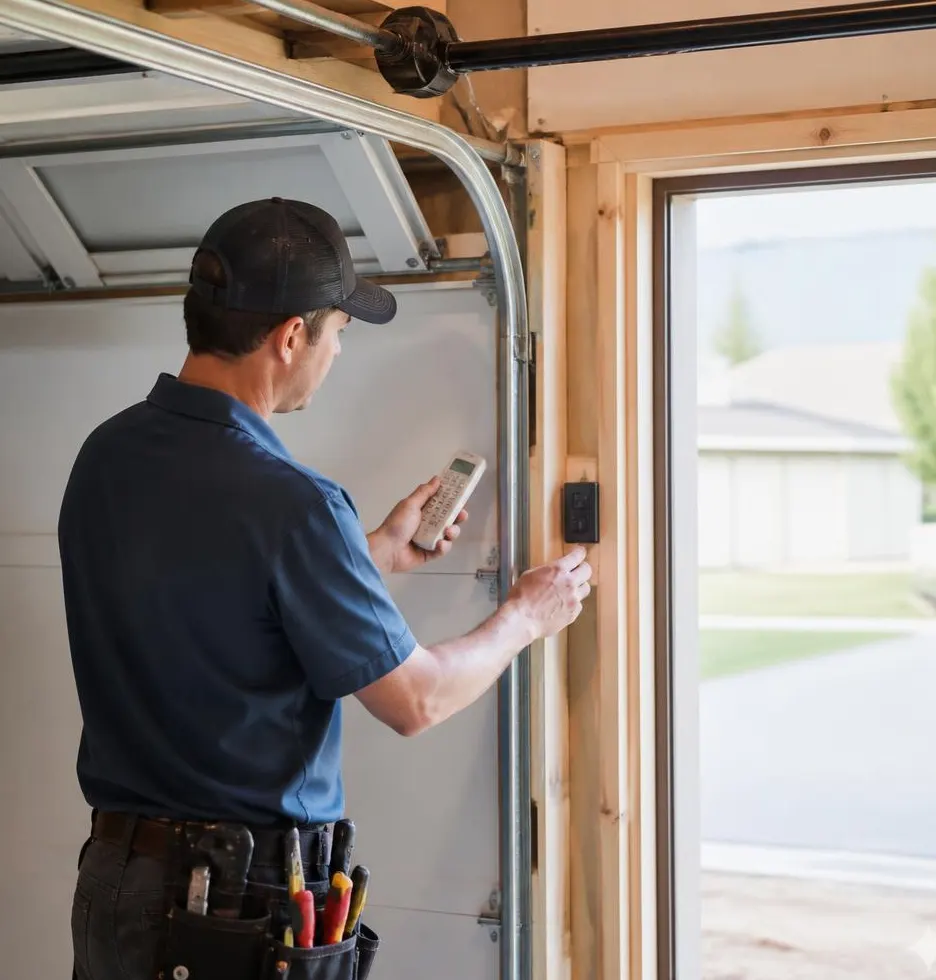
What a Technician Sees This Time of Year
By late fall, most service calls in this area follow a pattern. A homeowner notices the door is louder than usual, or it's sticking halfway up, or the opener suddenly won't respond on a cold morning. When a technician gets out there, the cause is almost always the same: months of humid-season wear that nobody noticed until the temperature dropped and exposed it. Rubber seals that softened and cracked in the summer heat finally let in a cold draft. Tracks that collected pollen and pine sap all season are now gritty enough to throw the rollers off. None of this is dramatic, but it adds up, and it's the kind of thing that's much cheaper to catch in October than to fix after an ice storm in January.
Check the Weatherstripping First
The rubber seal along the bottom of the door and the strips along the sides do more work in this climate than people expect. Summer humidity and UV exposure break down rubber faster than drier climates, so a seal that looked fine in spring can be brittle or torn by fall. Run your hand along the bottom seal and the side stops. If it's stiff, cracked, or has gaps where daylight shows through, replace it before cold air and rain start working their way in. A failed seal doesn't just let in a draft — it lets in moisture, which is a bigger problem for anything stored near the garage door, including wood doors themselves.
Why This Matters More Here Than Elsewhere
Garages in this part of the Lowcountry deal with a lot of ambient moisture even when it isn't raining — pine needles, humidity, and shaded, damp corners are common. A compromised seal lets that moisture in year-round, but it becomes obvious in winter when temperature swings cause condensation on metal tracks and hardware. That condensation, left alone, leads to surface rust on springs and rollers faster than homeowners expect.
Inspect Springs and Hardware for Temperature-Related Wear
Garage door springs are under constant tension, and that tension changes slightly with temperature. A spring that's already near the end of its life cycle after a hot, humid summer can fail suddenly when a cold snap or ice storm hits and the metal contracts. Signs a spring is wearing out include a door that feels heavier than usual when operated manually, visible gaps in the coil, or a loud bang from the garage (that's often a spring snapping). This is not a repair to attempt yourself — torsion springs store enough energy to cause serious injury — but it is worth having checked before winter rather than after a failure strands your car inside during an ice event.
Lubricate Rollers, Hinges, and Tracks
After a summer of heavy rain and humidity, tracks tend to collect a film of grit, pollen, and sap that turns into light rust or buildup by fall. Wipe down the tracks with a damp cloth, then apply a silicone-based lubricant (not WD-40, which attracts dust) to the rollers, hinges, and the track itself. Do this before the first cold snap — metal contracts slightly in colder temperatures, and a door that was already dragging in September will stick worse once overnight lows drop.
Test the Opener and Battery Backup
Garage door openers are electronics, and electronics are sensitive to both heat and cold. After a summer of high humidity, check that the opener's safety sensors are clean and properly aligned — a hazy or cobweb-covered sensor lens can cause the door to refuse to close, which becomes a bigger nuisance in winter when you don't want the garage open longer than necessary. If your opener has a battery backup, test it now. Power outages are common here when hurricane remnants or strong winter storms move through, and a dead backup battery means a manual, from-the-ground door lift during a storm — not ideal in the dark or the rain.
Address Wood Doors and Trim
Wood garage doors and wood trim around garage openings are common in this region, and they're especially vulnerable to the swing between a wet, humid fall and occasional freezing nights. Moisture trapped in wood that then freezes can cause splitting or warping. Inspect for soft spots, peeling paint, or gaps where water could pool, and reseal or repaint any exposed wood before the first hard freeze. This is a maintenance item that's easy to postpone and expensive to ignore.
Prep for Ice Storms and Power Outages
This area doesn't get sustained winter weather, but it does get occasional ice storms and the kind of fast-moving cold front that can catch a garage door system off guard. A few things to have ready before one hits: know where your manual release cord is and confirm it works, keep a battery backup charged if your opener has one, and make sure the door's bottom seal is intact so ice doesn't bond it to the slab. A door that freezes to the ground, even briefly, can damage the opener motor if someone tries to force it open with the remote.
When to Call Bluffton Garage Door
If your inspection turns up a cracked spring, a seal that's beyond a simple patch, or an opener that's not responding reliably, that's the point to call in a technician rather than keep testing it yourself. Bluffton Garage Door handles spring replacement and garage door maintenance visits that cover exactly this kind of seasonal tune-up — lubrication, hardware tightening, seal replacement, and a full safety check on springs and cables. If a storm does knock something loose or leave you with a door that won't open, our emergency garage door service is built for exactly that situation, with technicians who show up when they say they will.
If you're in Bluffton, Hilton Head Island, Beaufort, Okatie, Hardeeville, Port Royal, Sun City, or Ridgeland and want your garage door checked before winter weather arrives, call Bluffton Garage Door today to schedule a visit.